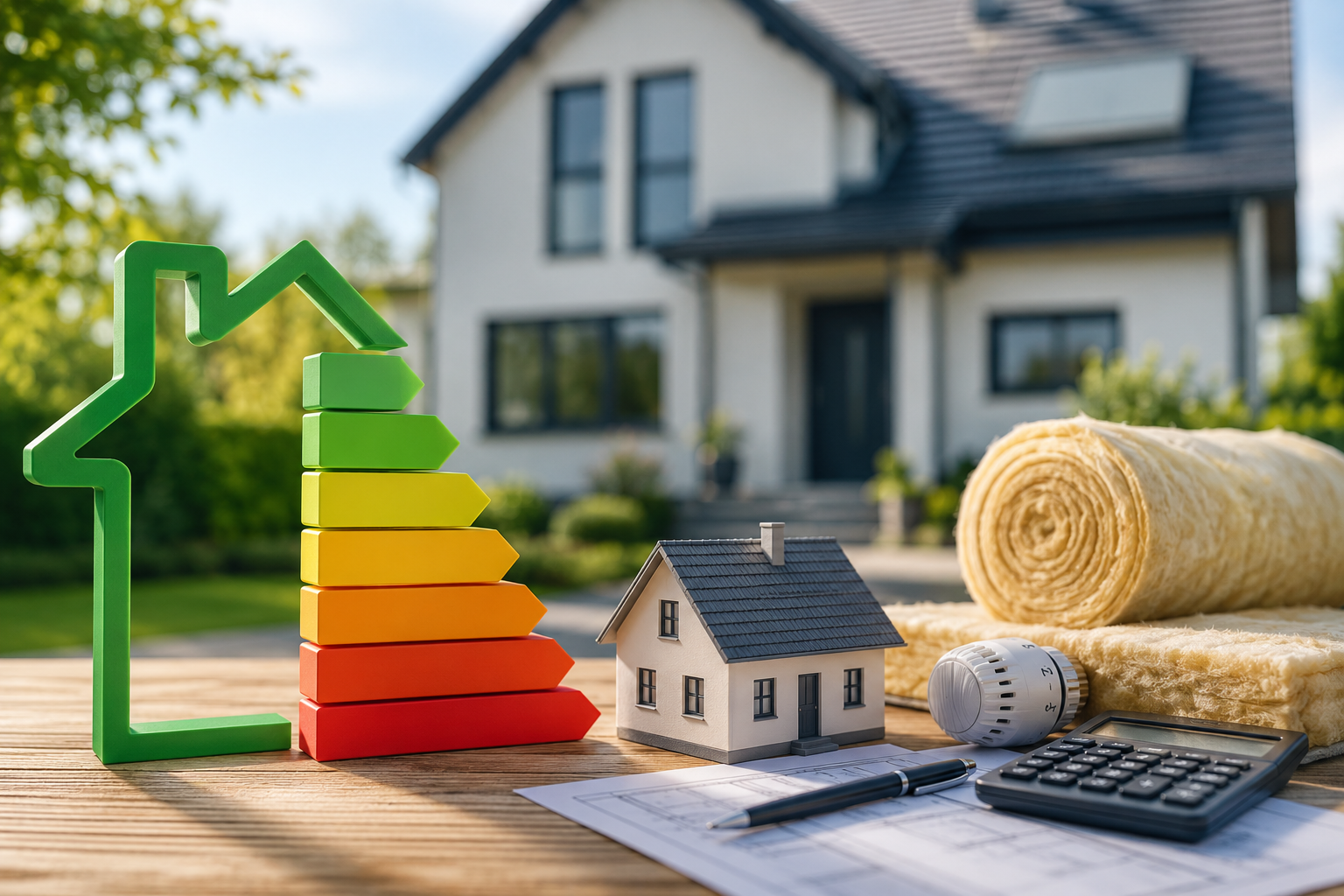
Should you improve your BER rating before selling in Ireland in 2026? In many cases, yes — selectively.
Key facts:- Research from the ESRI found each one-letter BER improvement adds approximately 1.5–2% to sale price (Farrelly & Southern, citing ESRI data).
- A-rated homes sell for approximately 9% more than equivalent D-rated homes.
- On a €390,000 property, moving from D to B could add ~€18,000–€23,000 to the sale price.
- The highest-return upgrades before selling are: attic insulation (cheapest per grade), cavity wall insulation, and heating controls/boiler upgrade.
- SEAI grants in 2026 cover a substantial portion of most upgrade costs — reducing net outlay significantly.
- Properties with BER B3 or better qualify for green mortgage rates from most major Irish lenders, widening the buyer pool.
- Always get a provisional BER assessment first before spending — it identifies the specific upgrades that will move your rating most efficiently.
If you are selling a home in Lucan, Celbridge, or anywhere in the Dublin commuter belt in 2026, your BER rating is no longer just a box to tick for the listing. It is part of the pricing conversation. Buyers are checking BER ratings before floor plans. Properties with stronger ratings sell faster and attract more offers. And since most major lenders now offer lower mortgage rates for homes at BER B3 or above, your rating directly affects how many buyers can compete for your home.
The real question is not whether BER matters — it does. The question is: which upgrades are worth doing before you sell, and which ones will cost more than they return? This guide gives you a clear, honest answer.
🏡 Selling in Lucan or Celbridge? Talk to Team Lorraine for a free, local assessment of what your home is worth and how your BER affects your sale strategy.
Get a Free Valuation →What Does Your BER Rating Actually Cost You at Sale?
The financial case for BER improvement before selling is backed by Irish-specific research. According to data from the ESRI — cited across multiple property market analyses — each one-letter BER improvement adds approximately 1.5% to 2% to the sale price of a property in Ireland. An A-rated home achieves roughly 9% more than an equivalent D-rated property.
In practical terms for the Lucan–Celbridge market:
| Move From → To | Estimated Price Premium | On a €390,000 Home |
|---|---|---|
| D → C | ~1.5–2% per grade | +€6,000–€8,000 |
| D → B | ~3–4 grades | +€18,000–€23,000 |
| C → B | ~2 grades | +€12,000–€15,000 |
| C → A | ~4–5 grades | +€23,000–€35,000 |
Based on ESRI research findings as reported by Farrelly & Southern and SaveOnHeat.ie (March 2026). Actual premiums vary by property type, location, and local market conditions. These are indicative ranges — your estate agent can advise on what BER premiums look like specifically in your area.
The premium is not just about price. Properties rated B3 or above qualify for green mortgage rates from most major Irish lenders. This meaningfully expands the number of buyers who can bid competitively on your home — particularly in a market where mortgage affordability is already stretched.
The Fabric-First Rule: Where to Start
Before deciding which upgrades to invest in, it helps to understand the principle that governs all effective energy retrofitting: fabric first.
SEAI recommends — and independent experts consistently confirm — that you should address heat loss through the building fabric before upgrading heating systems or adding renewables. The sequence is:
- Insulate first (attic, walls, floors)
- Upgrade heating (boiler or heat pump, once insulation reduces the load)
- Add renewables (solar PV or solar thermal, once demand is reduced)
This order matters for sellers because it is also the order of best return per euro spent. Attic insulation is the cheapest upgrade per grade of BER improvement. Cavity wall insulation is the second cheapest. Both are heavily grant-supported. A heat pump installed in a poorly insulated home, by contrast, performs inefficiently and costs more for less rating improvement.
For sellers with a limited pre-sale budget, fabric upgrades alone — attic insulation, cavity wall insulation, heating controls — can often move a C3 or D home into B territory at a net cost (after grants) that is well below the resulting sale price premium.
BER Upgrade Cost vs. Return Table
The table below gives indicative costs and returns for the most common BER upgrades for a standard 3-bedroom semi-detached house in Ireland. All costs are approximate and vary significantly by property and contractor.
| Upgrade | Typical Gross Cost | SEAI Grant 2026 | Net Cost After Grant | BER Improvement | Sale Price Uplift* |
|---|---|---|---|---|---|
| Attic insulation (top-up to 300mm) | €400–€800 | Up to €800 | €0–€200 | 1 grade | +€6,000–€8,000 |
| Cavity wall insulation | €1,200–€1,800 | Up to €1,700 | €0–€400 | 1–2 grades | +€6,000–€15,000 |
| Heating controls upgrade | €500–€900 | Up to €700 | €0–€300 | 0.5–1 grade | +€3,000–€6,000 |
| Condensing boiler replacement | €3,000–€5,000 | Up to €700 | €2,300–€4,300 | 1–2 grades | +€6,000–€15,000 |
| Windows & doors (2026 grant) | €5,000–€12,000 | Up to €3,000 | €2,000–€9,000 | 0.5–1 grade | +€3,000–€8,000 |
| Solar PV (4kWp) | €6,000–€9,000 | Up to €2,400 | €3,600–€6,600 | 1–2 grades | +€6,000–€15,000 |
| Heat pump (air-to-water) | €12,000–€18,000 | Up to €12,500† | €0–€6,000 | 2–3 grades | +€12,000–€23,000 |
*Sale price uplift based on ESRI research cited above, on a €390,000 property. Actual uplift depends on local market conditions.
†Heat pump grant includes €6,500 base + €6,000 Renewable Heat Bonus when replacing a fossil fuel system (from 2026). Confirm current grant levels at SEAI.ie before proceeding.
The stand-out value upgrades for sellers: Attic insulation and cavity wall insulation consistently offer the best cost-to-return ratio before a sale — often with a net cost close to zero after grants and a sale price benefit that can be 10–30x the net investment.
SEAI Grants Available in 2026
The Sustainable Energy Authority of Ireland (SEAI) administers Ireland’s home energy upgrade grant programme. In 2026, individual measure grants remain available for homes built before 2021, and include:
- Attic insulation: Up to €800
- Cavity wall insulation: Up to €1,700
- Internal wall insulation: Up to €4,500
- External wall insulation: Up to €8,000
- Heat pump (air-to-water): Up to €6,500 (plus €6,000 Renewable Heat Bonus when replacing fossil fuels)
- Solar PV: Up to €2,400
- Heating controls: Up to €700
- Windows and doors (2026 new grant): Up to €3,000 — introduced in 2026, but requires attic and walls to meet minimum insulation standards first
For whole-house deep retrofits targeting B2 or above, the One Stop Shop programme provides higher grant rates and manages the full retrofit through a single approved provider. This is the most efficient route for sellers with a D or lower rating who want to reach B2 before listing.
What to Do Based on Your Starting Rating
Your upgrade strategy should depend on where you are starting from:
Starting from C1 or C2
You are relatively close to B3 — the green mortgage threshold. Topping up attic insulation and adding heating controls may be enough to cross that line. Get a provisional BER assessment to confirm. Net cost could be under €500 after grants, with a potential sale price benefit of several thousand euro and access to a significantly broader green-mortgage-eligible buyer pool.
Starting from D1 or D2
There is meaningful room for improvement. Cavity wall insulation, attic top-up, and a heating controls upgrade can typically move a D-rated 1990s semi to C or even B3 for a net cost of €500–€1,500 after grants. This is one of the most compelling pre-sale investment scenarios in the Irish market.
Starting from E or below
The potential uplift is significant but so is the cost of a full retrofit. For sellers in this position, the key question is whether the timeline and budget allow for a staged upgrade, or whether the better strategy is pricing to reflect the current rating and letting the buyer manage the retrofit. A staged approach through SEAI’s One Stop Shop — targeting B2 — typically costs €35,000–€55,000 gross, with grants of €15,000–€25,000 reducing the net outlay. On a large enough property, this can still deliver a positive return. For smaller or lower-value properties, the calculation is less clear — speak to your estate agent before committing.
Already at B3 or above
Your rating is working in your favour. Ensure your BER certificate is current (valid for 10 years), confirm the rating is included prominently in your listing, and ensure your estate agent is explicitly marketing your green mortgage eligibility to buyers.
The One Step You Must Do Before Any Upgrade
Get a provisional BER assessment before spending a single euro on upgrades.
A provisional assessment — carried out by an SEAI-registered BER assessor — tells you exactly what your current rating is, where your home loses the most energy, and which specific upgrades will have the biggest impact on your rating. It costs approximately €150–€300 and takes one to two hours.
Without it, you risk spending money on upgrades that move your BER needle least. With it, you have a precise roadmap — essentially your home’s energy upgrade blueprint — that tells you which measures deliver the best return for your specific property.
The Advisory Report that comes with your BER certificate is the document you bring to any contractor or SEAI One Stop Shop. It is the single most useful pre-sale investment you can make.
Find a registered assessor at SEAI.ie.
When Upgrading Before Selling Is NOT Worth It
Not every seller should invest in BER improvements before listing. Here are the scenarios where it may not make sense:
- Your BER is already B or above. The incremental return on further improvement diminishes. Focus on presentation, pricing, and timing instead.
- Your timeline is too tight. Major upgrades — particularly heat pumps or external wall insulation — take weeks to months to complete and may require planning permission in some cases. If you need to sell quickly, launching at a fair price is usually more effective than delaying for upgrades.
- The property type limits return. In some apartment blocks, individual unit upgrades have limited impact on the overall BER rating. In these cases, the return on investment is lower and may not justify the cost.
- Your price point is below the green mortgage threshold. In very affordable price ranges, the green mortgage rate benefit matters less because buyers’ overall affordability is the primary constraint regardless.
- The local market has lower BER expectations. In some rural or older residential areas, BER premiums are less pronounced. Your estate agent’s knowledge of comparable recent sales is the best guide here.
In all of these cases, the right approach is to get a professional valuation and discuss your specific situation with your estate agent before committing to any upgrade spend. Read our guide on 7 costly property selling mistakes to avoid for more on pricing strategy.
FAQ: Improving BER Before Selling Ireland 2026
Does improving BER rating increase house value in Ireland?
Yes — research from the ESRI found each one-letter BER improvement adds approximately 1.5–2% to sale price in Ireland. An A-rated home sells for around 9% more than an equivalent D-rated property. The premium varies by property type and location, but the directional effect is consistent.
What is the cheapest way to improve BER rating in Ireland?
Attic insulation is the cheapest and most cost-effective upgrade per grade of BER improvement. For a home with inadequate attic insulation, topping up to 300mm of mineral wool can improve the BER by one full grade for a net cost close to zero after SEAI grants (up to €800 available). Cavity wall insulation is the next most cost-effective measure.
What BER rating do I need for a green mortgage in Ireland?
Most major Irish lenders — including AIB, PTSB, EBS, and Haven — require a BER of B3 or above for green mortgage rates. Bank of Ireland’s EcoSaver product offers a discount at all BER grades, with larger reductions for higher ratings. Qualifying for green mortgage rates significantly expands your buyer pool, as buyers can access lower rates on your property.
How much does a BER assessment cost in Ireland in 2026?
A BER assessment from an SEAI-registered assessor typically costs between €150 and €300 for a standard home, depending on size and location. The assessment produces both a BER certificate (valid for 10 years) and an Advisory Report identifying the best upgrades for your property.
Do I need to improve my BER before selling?
No — there is no legal minimum BER required to sell a property in Ireland. You must have a valid BER certificate displayed in your listing, but your rating does not need to meet any specific threshold. However, a lower rating typically reduces buyer demand, narrows your buyer pool (fewer green mortgage-eligible buyers), and may affect your achieved sale price relative to competing properties.
How long does it take to improve a BER rating before selling?
Simple measures like attic insulation and heating controls can be completed within a few days to two weeks. More complex upgrades such as heat pumps or external wall insulation can take 4–12 weeks. If your timeline is tight, focus on the fastest, highest-return measures first — attic insulation and heating controls — and price your property to reflect the remaining opportunity for the buyer.
Next Steps: Sell for More in Lucan & Celbridge
Key takeaways
- Each one-letter BER improvement adds approximately 1.5–2% to sale price in Ireland (ESRI data).
- The highest-return pre-sale upgrades are attic insulation, cavity wall insulation, and heating controls — often near-zero net cost after SEAI grants.
- BER B3 or above qualifies for green mortgage rates, widening your buyer pool significantly.
- Always get a provisional BER assessment (€150–€300) before spending anything — it tells you exactly which upgrades move your rating most.
- Upgrading is not always the right call — timeline, property type, price point, and local market dynamics all affect whether the return justifies the investment.
- Confirm current SEAI grant levels at SEAI.ie before committing to any works.

🏡 Find Out What Your Home Is Worth — With and Without BER Upgrades
Lorraine Mulligan has been selling homes in Lucan, Celbridge, and the Dublin commuter belt for over 20 years. Part of that service is giving vendors an honest assessment of whether pre-sale upgrades — including BER improvements — will translate into a stronger sale outcome in the current market, or whether the better strategy is to price correctly and launch without delay.
This article is for general information only and does not constitute financial or professional advice. Upgrade costs, SEAI grant amounts, and sale price impacts vary significantly by property and location. Always obtain a professional BER assessment and contractor quotes before committing to works, and confirm current SEAI grant amounts at SEAI.ie.