

 Smart Tips for Buying a Home in Ireland — What Every Property Buyer Should Know Before Making an Offer
Across Lucan, Celbridge and the wider Dublin commuter belt, demand for good homes remains strong and supply remains tight. As prices rise in many parts of…
Read article →
SellFree valuation & award-winning marketing
BuyHomes for sale across Dublin & Kildare
LetLandlord services & property management
RentFind your next rental home

Talk to Lorraine directly
Honest advice, no obligation. Usually back to you the same day.
office@teamlorraine.ie
Celbridge 01 627 2770
Lucan 01 628 3660
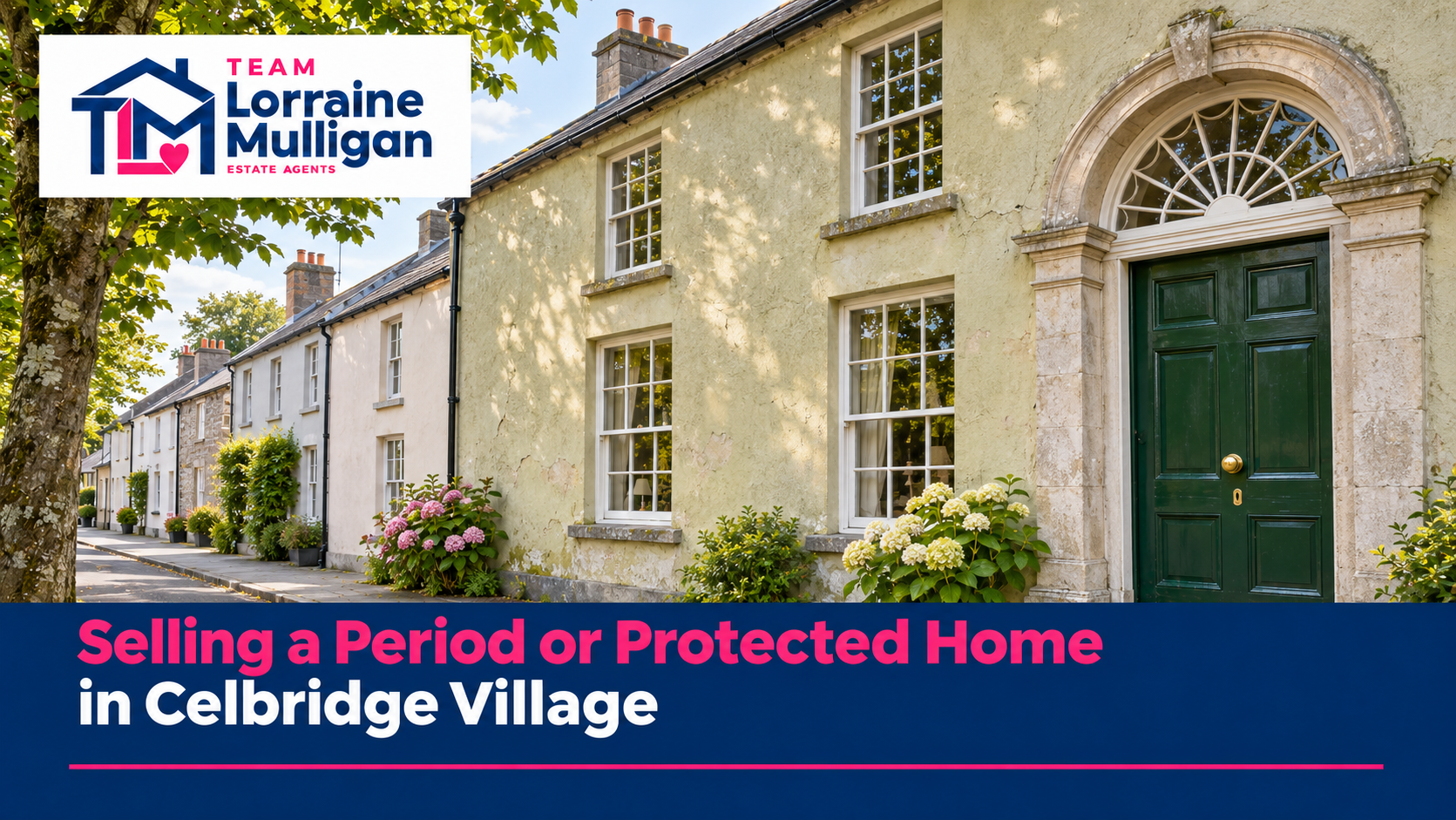
Selling a Period or Protected Home in Celbridge Village
This article provides general information only and does not constitute legal, planning or tax advice. Always confirm your property’s status and obligations with Kildare County Council and your solicitor.
Selling a period home in Celbridge works much like any other sale, but it needs extra preparation. First, confirm whether your house is a protected structure or sits within an Architectural Conservation Area. Then gather planning records for past works, check your BER position, and choose an agent who can market the home’s history to the right buyers.
Why Period Homes Need a Different Approach in Celbridge
Celbridge has one of the richest collections of historic buildings in North Kildare. From the Georgian frontages on Main Street to the houses near Castletown and the Liffey, older homes give the village its character.
However, that heritage brings extra rules. Buyers, their solicitors and their lenders will ask questions that owners of newer estate homes never face. As a result, a period sale can stall if you leave the paperwork until the last minute.
This guide explains what protected status means, how to check your home’s position, and how to prepare, price and market a period property in Celbridge.
Protected Structure, ACA or Period Home: What’s the Difference?
Many owners use these terms loosely. In practice, they mean quite different things, and each one affects your sale in its own way.
Three Heritage Labels Compared
| Protected Structure | Home in an Architectural Conservation Area (ACA) | Period Home With No Designation | |
|---|---|---|---|
| What it means | The council lists the building on its Record of Protected Structures | The home sits in a zone the council protects for its streetscape | An older home with no heritage listing |
| What’s covered | The whole building, inside and out, plus its curtilage | Mainly the exterior and how it looks from the street | Standard planning rules only |
| Minor works | Even small changes can need planning permission | Some exterior works lose their usual exemptions | Normal exempted development rules apply |
| BER to sell | Not required (BER exempt) | Required | Required |
| Typical buyer questions | Past works, permissions, upkeep costs | Windows, doors, roofs, extensions | Condition, BER, layout |
This table is a general guide. Always confirm your property’s exact status with Kildare County Council.
How to Check Your Home’s Status
Before you list, find out exactly what applies to your home. You can do this in a few steps:
- Check the Record of Protected Structures. You’ll find it in the Kildare County Development Plan 2023–2029.
- Look at the ACA maps. The same plan maps the county’s Architectural Conservation Areas, including Celbridge’s historic core.
- Search the National Inventory of Architectural Heritage. The NIAH at buildingsofireland.ie records many Celbridge buildings. However, an NIAH entry alone doesn’t make a house protected.
- Ask your solicitor. They can check your title documents and any notices the council served on previous owners.
- Contact the Architectural Conservation Officer. Kildare County Council’s conservation team can confirm your status and advise on works.
What Protected Status Means When Selling a Period Home in Celbridge
Protected status doesn’t stop you from selling. Instead, it shapes what buyers can do afterwards, so they want clear answers before they commit.
The Owner’s Duty of Care
Under planning law, the owner of a protected structure must stop it from falling into danger or serious disrepair. Once the sale closes, your buyer takes on that duty. Consequently, careful buyers look closely at the roof, gutters, windows and damp.
Planning Permission for Works
Normally, many small jobs count as exempted development. For a protected structure, however, any work that materially affects its character needs planning permission. That can include replacing windows, changing internal layouts or removing a fireplace.
For this reason, buyers who plan an extension or a new kitchen want to know what the council will likely accept.
The Section 57 Declaration
The owner or occupier of a protected structure can ask the council for a declaration. Most people still call it a Section 57 declaration. It sets out which works would or wouldn’t need planning permission for your specific building.
Having one in hand before you sell can reassure buyers. In other words, it gives them a clear starting point for their own plans. Note that this declaration doesn’t apply to homes that sit in an ACA but aren’t protected.
No BER Needed for Protected Structures
Protected structures and proposed protected structures don’t need a BER certificate when you sell. Instead, your advertising should state “BER Exempt”.
That said, homes in an ACA without protected status still need a valid BER. Either way, buyers will ask about running costs, so keep a year of heating and electricity bills ready.
Get Your Paperwork Ready Early
Paperwork causes more delays in period sales than anything else. Therefore, ask your solicitor to review the file before your agent launches the marketing.
Documents Worth Gathering
- Planning permissions for any extension, conversion or change of use, with compliance certificates
- A Section 57 declaration, if you or a previous owner obtained one
- Conservation reports or surveys from an architect or engineer
- Repair records for roofs, chimneys, sash windows and lime render
- Grant paperwork, because some grants carry conditions or repayment terms if you sell within a set period
- Utility bills and insurance details, so buyers can budget for upkeep
When Past Works Cause Problems
Older homes often have changes that nobody approved. For example, a past owner may have swapped timber sashes for uPVC or removed an internal wall.
These issues don’t always block a sale. Still, a buyer’s solicitor will raise them, and some lenders won’t proceed until you resolve them. So talk to your solicitor and the conservation officer early. In some cases, they may advise retention permission before you list.
Preparing Your Period Home for Viewings
Period buyers pay for character and authenticity. Accordingly, your preparation should protect the original features rather than cover them up.
Worth Doing Before You List
- Repair, rather than replace, sash windows, shutters and panelled doors.
- Have chimneys swept and fireplaces checked, since buyers love a working fire.
- Clear gutters and fix slipped slates, because damp is a common buyer concern.
- Highlight original cornicing, ceiling roses, flagstones and staircases with good lighting.
- Tidy the garden and boundary walls, as first impressions start at the gate.
Best Avoided Before a Sale
- Quick fixes with cement render or modern sealants, which can trap moisture in older walls
- Removing original features to create a “modern” look
- Major works on a protected structure without the right permission
- Painting over stonework or brick that buyers would prefer to see restored
If you aren’t sure whether a job is worth it, ask your agent first. Our guide to renovating before selling explains how to weigh the cost against the likely return.
Who Buys Period Homes in Celbridge?
Celbridge attracts a distinct group of period home buyers. Typically, they fall into a few groups:
- Dublin upsizers who want character and space within easy reach of the city
- Commuters who value Hazelhatch & Celbridge train station and the Liffey Valley road links
- Village lovers who want to walk to Main Street’s cafés, shops and the Castletown demesne
- Restorers who actively look for a heritage project and understand conservation work
Above all, these buyers want reassurance about future costs. Fortunately, support exists. For instance, owners of protected structures can still access SEAI home energy grants once they consult the local authority.
Similarly, the Vacant Property Refurbishment Grant offers up to €50,000 for a vacant home, or up to €70,000 if it’s derelict. In addition, Kildare County Council runs built heritage grant schemes for protected structures. Mentioning these options in your marketing can widen your buyer pool.
How to Price and Market a Period Home
Pricing a period home takes more judgement than pricing a semi-detached house in a modern estate. Often, there are few truly comparable sales on the same street.
Pricing Without Direct Comparables
Your agent should start with recent sales on the Residential Property Price Register. Then they adjust for condition, setting, garden size, original features and any restrictions. Our guide to house valuations in Celbridge explains the process in more detail.
Telling the Home’s Story
Period homes sell on emotion as well as square metres. So strong marketing should include:
- Professional photography that captures details such as fanlights, shutters and fireplaces
- Accurate floor plans, because older layouts can be hard to picture
- A short history of the house and the street, where you know it
- Clear, upfront wording about protected or ACA status
Being open about heritage status from day one builds trust. Otherwise, a buyer who discovers it late may renegotiate or walk away.
Expert Guidance From Lorraine Mulligan
About Lorraine
Lorraine Mulligan leads Team Lorraine from offices on Main Street, Celbridge and Lower Main Street, Lucan. She has worked as an estate agent for 27 years and has taken part in over 7,000 home sales.
How Team Lorraine Handles Period Homes
With an office on Main Street, the team works in the heart of Celbridge’s historic village every day. They know which features local buyers value and which questions they’ll ask.
Before launch, they help you assemble the planning and heritage paperwork with your solicitor. Then they build a marketing campaign that tells your home’s story and reaches buyers who appreciate it.
Conclusion: Preserve the Character, Prepare the Paperwork
Selling a period home in Celbridge rewards careful preparation. Confirm your home’s heritage status, gather planning records early, and protect the original features that buyers will pay for.
With the right solicitor and estate agent beside you, a protected or period property can achieve its full value and find an owner who will look after it.
Book Your Free Period Home Valuation
Contact Lorraine Mulligan at Team Lorraine for expert advice on valuing and selling a period or protected home in Celbridge.
📞 +353 1 627 2770
📍 Main Street, Celbridge, Co Kildare
📍 Unit 2, Lower Main Street, Lucan, Co Dublin
Frequently Asked Questions
Can I sell a protected structure in Celbridge?
Yes. Protected status doesn’t restrict who can buy your home or when you sell it. However, your buyer takes on the legal duty to look after the building, and future works may need planning permission. Therefore, gather planning records and any Section 57 declaration before listing, so buyers and their solicitors get clear answers quickly.
Do I need a BER to sell a period home in Celbridge?
It depends on the home’s status. Protected structures and proposed protected structures don’t need a BER, so the advert simply states “BER Exempt”. In contrast, period homes in the Architectural Conservation Area, or with no designation, still need a valid BER before marketing. Either way, buyers will ask about heating costs, so keep recent bills to hand.
Does protected status reduce a home’s value?
Not necessarily. Many buyers actively seek period character, original features and a village location, and they’ll pay for them. That said, restrictions on future works can narrow the buyer pool for some homes. Ultimately, condition, setting and clear paperwork usually matter more to the final price than the protected label itself.
Can a buyer extend a protected structure?
Often, yes, but they will need planning permission, and the council will assess how the extension affects the building’s character. For this reason, a sensitive design that sits behind or beside the original house usually has a better chance. A Section 57 declaration and early talks with the conservation officer help buyers plan with confidence.
This article provides general information only and does not constitute legal, planning or tax advice. Always confirm your property’s status and obligations with Kildare County Council and your solicitor.
Smart Tips for Buying a Home in Ireland — What Every Property Buyer Should Know Before Making an Offer
Across Lucan, Celbridge and the wider Dublin commuter belt, demand for good homes remains strong and supply remains tight. As prices rise in many parts of…
Read article →
 Selling a House With Tenants in Lucan: Notice, RTB Rules and Vacant Possession
Selling a house with tenants in Lucan gives you two routes. You can sell with the tenant in place to an investor, or you can end…
Read article →
 Selling a House With an Attic Conversion or Extension in Lucan
Selling a house with an attic conversion or extension in Lucan can add real value, but only when your paperwork matches the work. Buyers' solicitors will…
Read article →